
How Do I Choose the Right Pinterest Keywords for My Niche?
Sometimes, we may think all we have to do is use keywords related to Pinterest trends, and then we’ll come up in searches. While using trending topics is helpful, coming up in searches goes beyond that.
When you open Pinterest and type something in the search bar, you have so many Pinterest pin graphics and videos that appear on your screen. You want your content to be among those results.
The good news is that you can get really, really good at doing Pinterest keyword research for your clients or for yourself as a business owner. If you don’t want to learn how, you can hire someone to do it for you.
In this blog post, I am sharing tips to help you get a better understanding of what it takes to find the keywords your potential buyers and readers are using on Pinterest.

Start With Your Niche
Your niche shapes the entire keyword process. Pinterest needs to know what your content is about so it can match your pins with people searching for those topics.
What if you have more than one niche? Or what if you’re a general blog or shop that sells things from various niches?
Don’t worry, I’ll answer those questions.
First, ask yourself:
What does my content or offer help people do?
What problems do I solve/ transformation do I offer?
What topics do I cover most often?
What makes my brand or blog different? What makes me unique?
Examples:
A travel blogger could focus on budget travel, solo travel, or destination guides.
A designer might focus on branding inspiration, color palettes, or design tutorials.
A business coach may focus on working with stay-at-home moms who want to earn an income from home.
Your niche is your starting point because keywords must always reflect what you create.

The stress-free way to get the right keywords for your Pinterest growth
If you’re using Pinterest to market your business but have no idea where to even start with keywords…you're not alone.
What You’ll Get
✔️ 40 high-impact keywords
A mix of short-tail, medium-tail, long-tail, and niche-specific keyword phrases your ideal audience is actually searching for on Pinterest.
✔️ 10 optimized board titles and descriptions
So you can structure your Pinterest profile like a pro — even if you’re just starting out.
✔️ Organized delivery in a clean, easy-to-read PDF
Everything’s ready to copy and paste — no spreadsheets or messy docs.
✔️ Turnaround time: just 2–3 business days
Use Pinterest As Your Main Keyword Tool
Pinterest search suggestions are your best source of real user intent on Pinterest. These suggestions come directly from what people are searching for. External keyword tools are helpful and can save you time, but I've never needed one to help my clients succeed on Pinterest.
Type one or two words related to your niche. Pinterest will show some suggested keywords. These are actual searches that people make on Pinterest.
Examples:
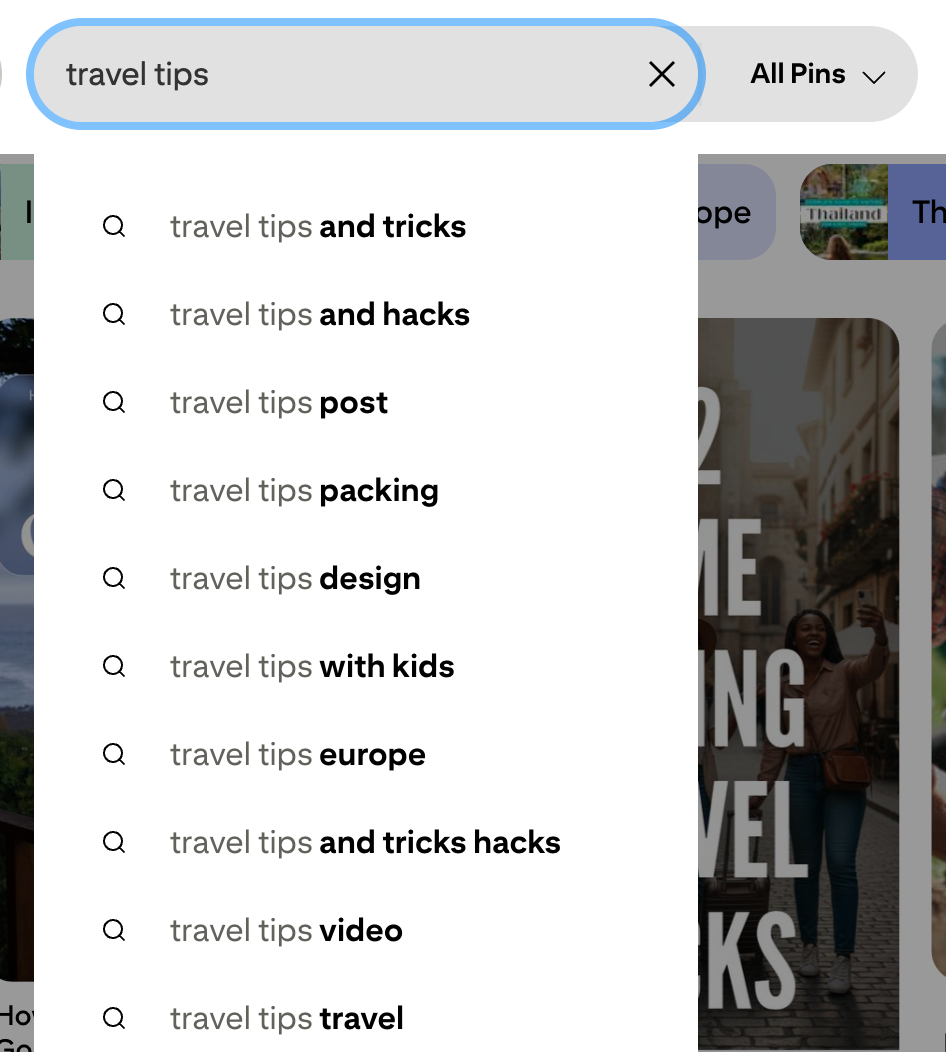
Type “travel tips”
You’ll see “travel tips and tricks”, “travel tips packing”, “travel tips Europe”, and so on.
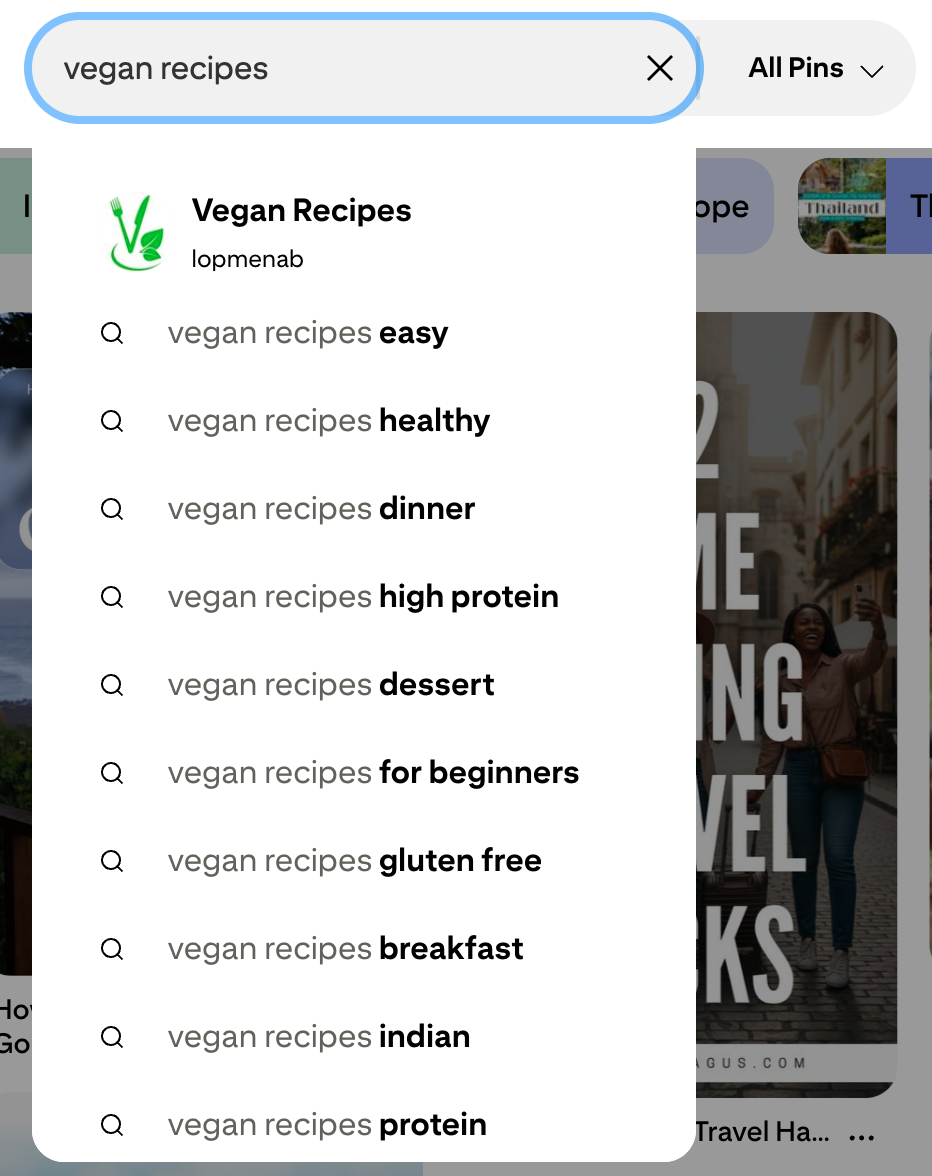
Type “vegan recipes”
You might see suggestions like “vegan recipes healthy”, “vegan recipes dinner”, and so on.
These words help you understand what people want within your niche.
You can also use guided search and navigate the suggested terms there.

Another tip is to scroll down until you see a section called “related searches”.
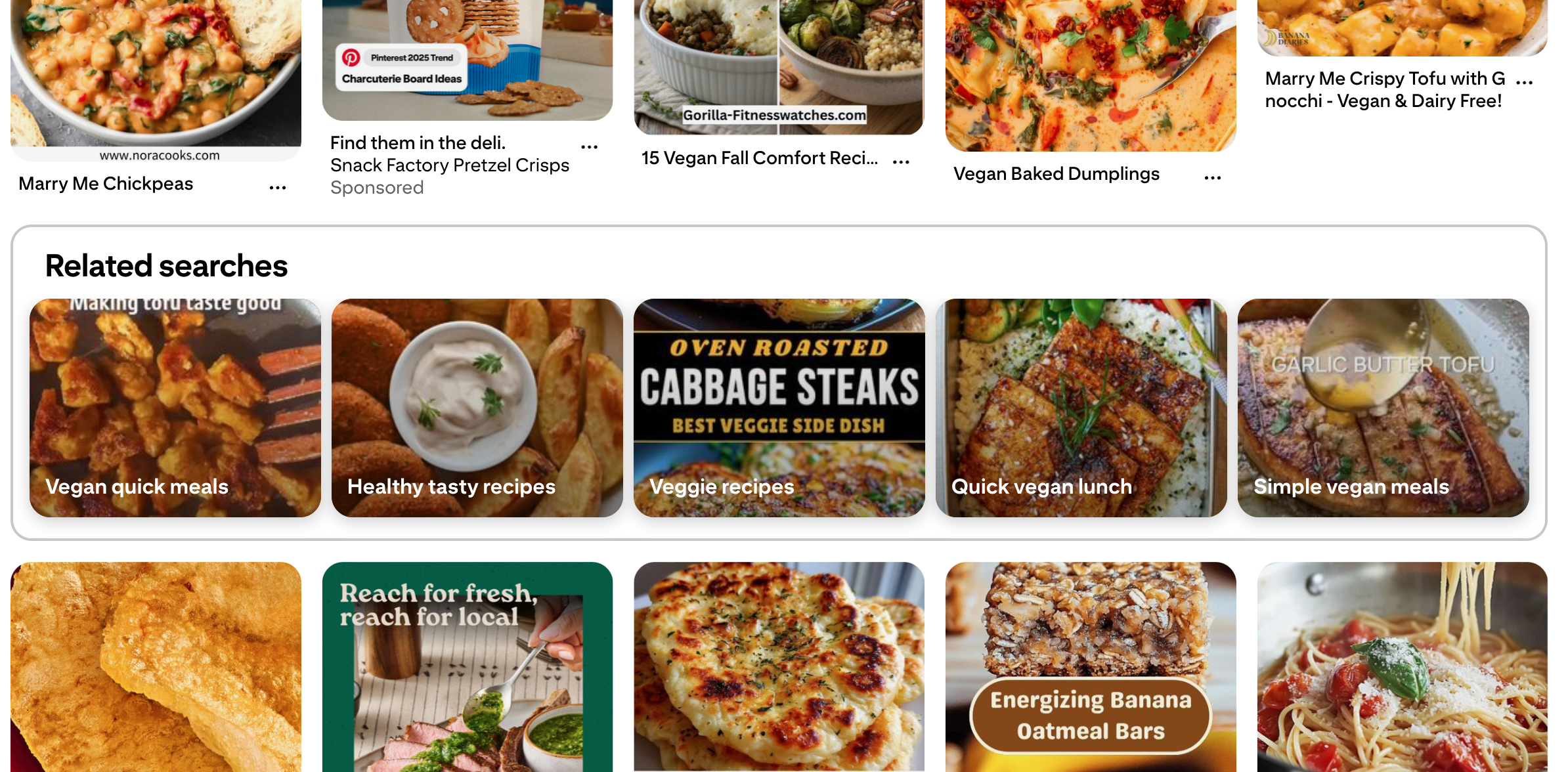
There are more ways to use Pinterest to find the keywords you need. You can read my blog on how to search for Pinterest keywords for more details.
The Balancing Act Between Niche Keywords and Broader Terms
Many bloggers and creators who hire me to do Pinterest keyword research have already chosen overly broad keywords because they look popular. Broad keywords make it harder to rank.
Instead, go deeper. (Hint: go back to the first section where I shared four questions you can answer.)
Examples:
Instead of “travel tips” try “travel tips for women” or “travel tips for Italy.”
Instead of “home office ideas” try “home office ideas for small spaces.”
Instead of “branding inspiration” try “branding inspiration warm color palette.”
Specific keywords help Pinterest understand your content faster and connect you with the right audience. Notice how I bolded the beginning of the niche keywords?
That’s to show you that you will naturally use broad keywords in your more niche keywords anyway, so there’s no need to focus on broader terms.
The more specific the keyword, the better the match when it comes to reaching potential readers and buyers.
Check What Type of Content Already Ranks
Research is your best friend, and doing keyword research always involves searching Pinterest. Before you choose your keywords, take time to browse Pinterest and really dig into the pins that come up as results.
What do they look like? (Audit the colors, fonts, design style, etc)
What keywords are used & how often?
Look at the first rows of results. Are they graphic pins, videos, tutorials, infographics or product pins? Do they match the type of content you want to create?
Now, the most important thing you need to do is identify how you would improve the pins and identify a gap. What seems to be missing? Knowing this will be really helpful in helping you create top-of-funnel content that will resonate with your potential buyers and readers.
Select Supporting Keywords For Each Pin
Once you know your keyword themes, choosing keywords for each pin becomes much easier.
You can follow this simple process:
Use one keyword in your Pinterest pin title
Use one to three keywords in your Pinterest pin descriptions
Make sure to use a keyword in your file name
When possible, add a keyword as a text overlay on your creative (graphic or video)
Keywords should feel natural, and you should avoid keyword stuffing. They should match the pin title, the description, and the board you save it to. When everything lines up, your content performs much better.
Keep Learning From Your Analytics
Pinterest analytics will show you which keywords drive impressions, clicks, and saves. Your focus should be on engagement and outbound clicks. Over time, you will learn which keywords are worth using more often and which ones are not moving the needle.
Your keyword strategy grows with your account. It is never set in stone. It evolves with your niche, your audience, and your content.
You Now Have a Clear Keyword System
Once you have your keywords, keep everything organized in a content management system like Google Sheets, Notion, or your business's preferred tech stack.
The idea is to keep track of your keywords so that you can also track what works best and what doesn't. Identifying what keywords work best will also help you research more similar keywords.
Frequently Asked Questions About Finding Niche Pinterest Keywords
-
A good Pinterest keyword clearly matches what you create and what your audience is searching for. If you search the keyword on Pinterest and the results look similar to your content style, topic, and audience, it is likely a good fit. If the results feel unrelated or too broad, the keyword may not align with your niche.
-
Trending keywords can help with short term visibility, but evergreen keywords are more reliable for long term traffic. Evergreen keywords reflect ongoing problems, questions, or interests your audience has. A balanced strategy usually works best, but evergreen keywords should be the foundation of your Pinterest content.
-
You can reuse keywords, but make sure to diversify with other relevant keywords. Repeating the exact same keyword on every pin can limit your reach. Using variations and related phrases helps Pinterest understand your content more deeply and gives you more chances to appear in search results.
-
If you cover more than one niche, create clear keyword themes for each one. This means separate boards, content topics, and keyword groups. Pinterest can still understand your account as long as each piece of content is clearly labeled and saved to relevant boards.
-
No. Pinterest search suggestions, guided search, and related searches are often enough to find strong keywords. These suggestions come directly from real user searches on Pinterest. Paid tools can save time, but they are not required to succeed on Pinterest.
-
Keywords work best when they are used consistently across your pin title, pin description, file name, board name, and board description. When everything aligns, Pinterest has an easier time understanding and ranking your content.
-
One main keyword and one to three supporting keywords is usually enough. Keywords should feel natural and readable. Avoid repeating the same phrase over and over. Pinterest prioritizes clarity and relevance over keyword stuffing.